
Why is Seoul the Heart of South Korea?
Seoul, the Heart of South Korea, is the vibrant capital and one of the most dynamic cities in the world. The city of Seoul is the capital of South Korea and it is one of the most populous regions in the world. Full of rich history dating back to the Joseon dynasty, and now the epicenter of K-pop industry, Seoul is incredibly one of a kind in the world. It is possible to stroll through traditional hanok neighborhoods in the mornings, visit ultra-modern stores in the malls in the afternoons, and attend mesmerizing technology-driven musical performances in the evenings.
Travelers who wish to explore Korea over the course of a week will be surprised by the country’s rich culture, history, diverse religions, delectable cuisine, innovative technology, and vibrant lifestyle. In this article, we will discuss key attractions and experiences that this wonderful city has to offer.
Looking for more adventures beyond Seoul? Explore Jeju Island, Busan beaches, and Korea’s festivals with us at
https:https://www.dynastykorea.com/category/blog/
Day 1: Historical & Cultural Seoul
Gyeongbokgung Palace
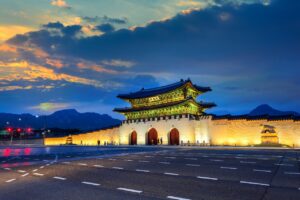
Start your adventure with the spectacular Gyeongbokgung Palace, the most expansive of Seoul’s Five Grand Palaces. Constructed in the year 1395, it serves as a symbol of Korea’s historical legacy. Its extensive beauty, remarkable architecture, and the Changing of the Guard Ceremony are well-known. To make the visit more immersive, do not forget to rent a hanbok (traditional Korean attire), which permits you to access the palace for free. Hanbok rentals enhance visitors’ connections with Korean culture and also serve as great keepsakes.
Bukchon Hanok Village
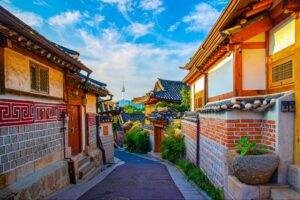
Only a brief stroll away is Bukchon Hanok Village, a living area consisting of hanoks, which are traditional Korean homes that have been preserved. The village’s narrow streets, the wooden houses, and the roofs of the houses are all tiled, which reminds one of the historical ages. Rather than a museum, the village is actually alive—residents of the village still inhabit the area, and numerous homes have been turned into art galleries, tea shops, and cultural hubs. Coming to Bukchon enables tourists to see how Korean culture is preserved in a modernized city.
Changdeokgung Palace
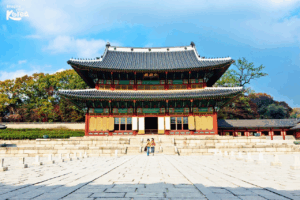
Changdeokgung Palace is a UNESCO World Heritage Site located in Seoul. It was built during the Joseon Dynasty and is famous for its Secret Garden, known as Huwon. The garden blends well with nature, featuring lotus ponds, pavilions, and ancient trees. Unlike other palaces, its design follows the land’s natural flow. This creates a space where history and tranquility coexist. It is a perfect place to experience authentic Korean royal heritage.
Day 2: Modern Seoul & Technology
Dongdaemun Design Plaza (DDP)
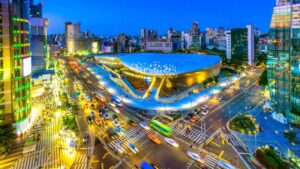
Designed by Zaha Hadid, DDP is one of Seoul’s most eye-catching landmarks. Its curved, futuristic structure hosts fashion shows, exhibitions, design shops, and night markets. At night, the LED rose garden makes it one of the most popular spots for photos in the city. DDP shows how Seoul uses technology and creativity to define its identity as a design capital.
Starfield Library
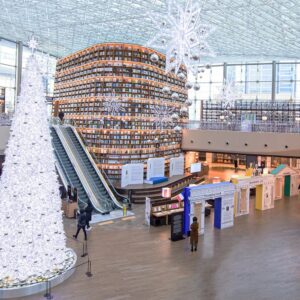
Inside the massive COEX Mall is Starfield Library, an impressive open library with 13-meter-high bookshelves and thousands of books. It combines a love of reading with modern design, offering a quiet escape for locals and travelers. It also showcases Korea’s dedication to education and culture.
Gangnam District
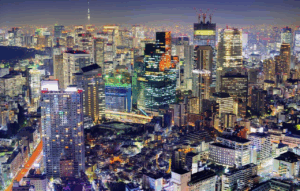
Gangnam is the epitome of wealth and glamour, where business, entertainment, and luxury come together. It features high-end boutiques, trendy cafés, and the headquarters of major K-pop agencies. The term “Gangnam Style” captures the flashy lifestyle associated with this area. Beyond luxury, it highlights how Seoul represents aspiration and ambition.
Technology in Daily Life
Seoul is often called a smart city. Technology is a major part of daily life:
– AI-powered cafes where robots prepare and serve drinks.
– Cashless payments through apps like KakaoPay and Naver Pay.
– Smart public transport with Wi-Fi-enabled buses, subways with precise schedules, and apps that provide real-time updates.
– High-speed internet everywhere—even in subways and public parks.
This blend of technology into daily life makes Seoul a futuristic and practical city.
Day 3: Spiritual & Religious Seoul
Myeongdong Cathedral
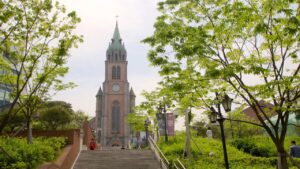
This Gothic-style cathedral, built in 1898, is the spiritual center for Korean Catholics. It also played a role in Korea’s democratic movements. Today, it offers a peaceful place for reflection amid the busy Myeongdong shopping district.
Bongeunsa Temple
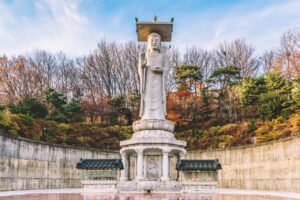
Located near COEX Mall, Bongeunsa Temple offers a mix of spirituality and urban life. Visitors can join temple stay programs, practice meditation, and learn Buddhist teachings. The temple serves as a reminder that faith and tranquility remain important in a fast-paced city.
Rituals & Religious Practices
Korea’s religious culture is diverse:
- Buddhism emphasizes meditation, rituals, and temple festivals like the Lotus Lantern Festival.
- Christianity is widespread, with churches in every neighborhood.
- Confucian traditions still influence social values, such as respect for elders and family unity.
Seoul’s spirituality is not limited to temples or churches—it’s woven into the way people live and treat one another.
Day 4: Food & Markets
Gwangjang Market
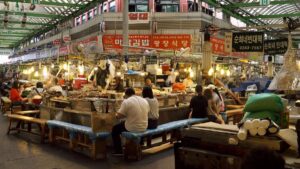
One of the oldest markets in Seoul, Gwangjang is a paradise for food lovers. You can try bindaetteok, which are mung bean pancakes, mayak gimbap, those addictive mini rice rolls, and spicy tteokbokki. Adventurous eaters can try sannakji, which is a live octopus.
Namdaemun Market
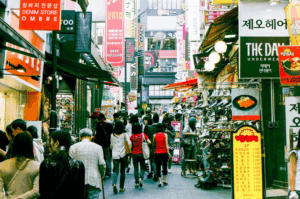
As the largest traditional market in Korea, Namdaemun offers everything from clothes and kitchenware to souvenirs and local snacks. It’s always lively and shows a true taste of Korean shopping culture.
Café Culture
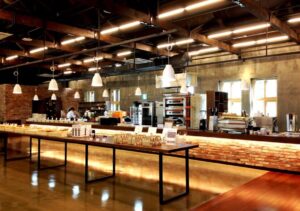
Seoul’s café culture is unique. From minimalist coffee shops to quirky themed cafés, like raccoon cafés, Hello Kitty cafés, and K-pop cafés, each place offers a different experience. Cafés serve as social hubs where people work, study, or relax.
Korean Food Culture
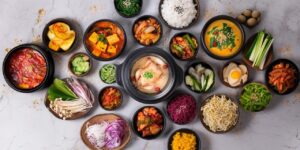
Dining in Korea is communal. Meals include banchan, which are side dishes shared by everyone. Etiquette matters: wait for the eldest to start eating, use both hands when pouring drinks, and never stick chopsticks upright in rice. Food shows both tradition and respect.
Day 5: Fun & Entertainment
Namsan Seoul Tower (N Seoul Tower)
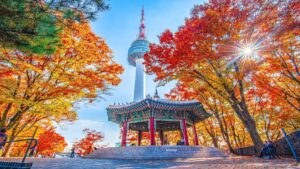
Located on Namsan Mountain, this tower provides breathtaking panoramic views of Seoul. Couples often visit to attach padlocks at the “Locks of Love” fence, which symbolizes eternal love.
Cheonggyecheon Stream
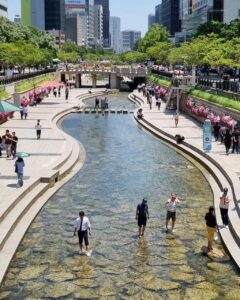
A restored stream in downtown Seoul, Cheonggyecheon, stretches nearly 11 km. It’s lined with walking paths, art installations, and seasonal light festivals, making it perfect for a peaceful evening stroll.
Hongdae Shopping Street
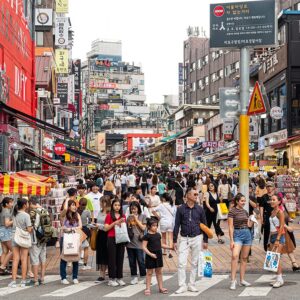
Known for its youthful energy, Hongdae is full of street performers, indie bands, shops, and clubs. It’s the heart of Seoul’s artistic and musical scene. Expect live music, art exhibitions, and plenty of fun.
Music & K-pop
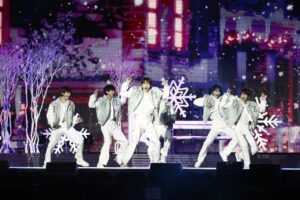
Seoul is the birthplace of the K-pop phenomenon. Entertainment agencies train idols who later dominate global charts. Beyond K-pop, Korea also celebrates traditional music played on instruments like the gayageum and janggu. This mix of modern and traditional music reflects Seoul’s cultural diversity.
Day 6: Nature & Adventure
Han River (Hangang)
A central feature of Seoul, the Han River is a popular leisure spot. Locals come
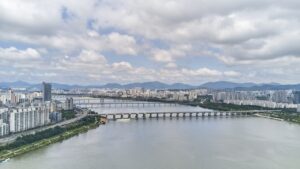
for picnics, cycling, rollerblading, and water sports. You can also enjoy night cruises with stunning views of the city. Unique to Seoul, food delivery services bring fried chicken and drinks right to riverside picnic spots.
Seokchon Lake
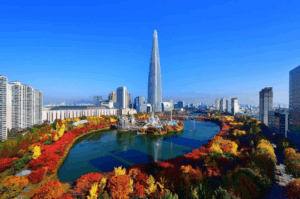
During spring, Seokchon Lake becomes one of the best places to see cherry blossoms in Seoul. It’s peaceful but close to Lotte World, one of the world’s largest indoor amusement parks.
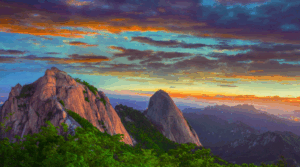
Bukhansan National Park
Perfect for adventure seekers, Bukhansan offers hiking trails with breathtaking views of Seoul. The park’s mix of granite peaks, forests, and temples attracts both tourists and locals who want to escape the city’s hustle.
Day 7: Festivals, Education & Daily Life
Festivals in Seoul
Chuseok (Korean Thanksgiving): Families honor ancestors, wear hanbok, and share traditional food.
Seollal (Lunar New Year): Marked by rituals, family gatherings, and folk games.
Lotus Lantern Festival: Streets are filled with colorful lanterns celebrating Buddha’s Birthday.
Hi Seoul Festival: A modern cultural festival featuring performances, art, and exhibitions.
Education System
South Korea is known for its tough education system. Students attend school during the day and often go to hagwons (private academies) at night. Universities like Seoul National University, Yonsei, and Korea University are highly respected. Education is a source of pride and competition in Korean society.
Daily Life & Social Rules
Seoulites are disciplined, hardworking, and aware of fashion. Social etiquette includes bowing, using polite language, and showing respect to elders. Public spaces are organized, and people follow rules closely, whether it’s recycling or subway etiquette. Despite the fast pace, community and family values remain strong.
Actors & the Entertainment Industry
Seoul is the heart of the K-drama industry. Stars like Song Hye-kyo, Lee Min-ho, and Park Seo-joon are not just actors; they are cultural ambassadors, sharing Korean culture worldwide. The entertainment industry reflects both Korea’s creativity and its global impact.
“Travelers looking for international insights and curated itineraries can explore the Lonely Planet Korea Guide.”
FAQs on Travel in Seoul
Q1. When should I travel to Seoul?
The best time is spring (April–June) for viewing cherry blossoms and festivals, and autumn (September–November) for good weather and fall colors. Winter (December–February) is perfect if you love snow and skiing in the vicinity.
Q2. Is 7 days sufficient for Seoul?
7 days is ideal to see palaces, temples, markets, K-pop landmarks, shopping streets, and nearby nature/hiking trails without feeling hurried.
Q3. Is it necessary to speak Korean to travel around Seoul?
No. Simple English is spoken in tourist spots, restaurants, and hotels. It is still useful to learn some simple Korean words such as annyeonghaseyo (hello) and kamsahamnida (thank you) for enrichment.
Q4. How do I move around Seoul conveniently?
Use a T-money card for buses, subway, and taxis. The subway network is widespread and English signs are provided. For ease of use, you can also use Naver Maps or Kakao Maps in place of Google Maps.
Q5. What foods should I not miss eating in Seoul?
Some of the must-eat foods are:
Bibimbap (rice with vegetables & meat)
Samgyeopsal (grilled pork belly BBQ)
Tteokbokki (spicy rice cakes)
Bingsu (Korean shaved ice dessert)
Kimchi stew
Q6. Can I do day trips from Seoul?
Yes! Most popular day trip spots are:
Nami Island & Petite France (1.5 hours away)
DMZ Tour (to study Korea’s history)
Everland or Lotte World (theme parks)
Conclusion: Why 8 Days in Seoul is Unforgettable
A 8-day trip to Seoul is more than just sightseeing; it is a journey through time, culture, and innovation. In one week, you’ll witness the grandeur of palaces, the serenity of temples, the excitement of markets, the energy of K-pop streets, and the high-tech lifestyle. You’ll taste authentic food, participate in festivals, and grasp the values that Koreans live by.
Seoul is not just a destination; it’s a vibrant story of a nation that embraces the future while honoring the past. A week here leaves you inspired, enlightened, and eager to return.

